
What Is Fertility? Understanding Your Reproductive Health
If you've typed "what is fertility" into a search bar, you're probably looking for more than a textbook definition. You might be trying to understand your own body, plan for the future, or simply make sense of a topic that often feels more confusing than it should be.
Let's start simple.
What Is Fertility?
Fertility refers to your natural ability to conceive a child. It depends on a number of factors working together: the regular release of a healthy egg (ovulation) in women, healthy sperm production in men, and a reproductive system capable of supporting fertilization and pregnancy.
Fertility isn't a single switch that's simply "on" or "off." It exists on a spectrum and can be influenced by age, hormonal balance, lifestyle, underlying health conditions, and genetics. Understanding where you stand on that spectrum is the first step toward making informed decisions about your reproductive health, whether you're trying to conceive now, planning for later, or simply curious about how your body works.
Understanding Reproductive Health
Reproductive health is the broader picture that fertility fits into. It refers to the overall wellbeing of your reproductive system, including hormonal balance, menstrual cycle regularity, and the normal functioning of reproductive organs.
Good reproductive health doesn't guarantee pregnancy will happen easily, but it does mean your body's systems are working the way they're designed to. Many people only start paying attention to reproductive health when they're ready to conceive, but understanding it earlier can help you recognize patterns, spot potential concerns sooner, and feel more confident about your choices later on.
How Fertility Works: The Basics
For conception to happen, several things need to align:
In women:
The ovaries release a mature egg during ovulation, typically once per menstrual cycle
The egg travels through the fallopian tube, where it may be fertilized
The uterine lining must be ready to support implantation if fertilization occurs
In men:
The testes produce sperm continuously
Sperm must be healthy in count, movement (motility), and shape to reach and fertilize an egg
When any part of this process is disrupted, whether due to hormonal imbalances, structural issues, or other factors, fertility can be affected. This is true for both women and men. According to the CDC, in roughly a third of couples facing difficulty conceiving, factors on both sides contribute, and male-factor causes alone account for a meaningful share of cases too.
What Affects Fertility?
Several factors play a role in fertility, and most of them are interconnected:
Age is one of the most significant. Female fertility gradually declines starting in the late 20s, with a more noticeable shift after age 35. This is largely due to changes in both the quantity and quality of eggs over time. Male fertility also changes with age, though typically more gradually.
Hormonal health affects ovulation regularity, egg quality, and the body's ability to maintain a pregnancy. Conditions like PCOS (Polycystic Ovary Syndrome) and thyroid disorders can disrupt this balance.
Lifestyle factors such as nutrition, stress levels, sleep, smoking, and alcohol consumption can all influence fertility in both women and men.
Underlying health conditions, including endometriosis, fibroids, and certain autoimmune conditions, can impact reproductive function.
Weight and body composition play a role too, as both significantly low and high body fat can disrupt hormone production and ovulation.
None of these factors guarantee a particular outcome on their own. They're simply pieces of information that, together, can help paint a clearer picture of your reproductive health.
Signs That May Be Worth Paying Attention To
While only a healthcare provider can properly evaluate fertility, some patterns are worth being aware of:
Irregular or absent menstrual cycles
Unusually heavy, painful, or prolonged periods
Difficulty conceiving after 12 months of trying (or 6 months if you're over 35)
Known hormonal conditions such as PCOS or thyroid issues
Noticing one or more of these doesn't necessarily mean something is wrong. It simply means it may be worth discussing with a healthcare provider, who can help you understand what's happening and what your options might look like.
Why Understanding Your Fertility Matters
Whether you're actively trying to conceive, thinking about it for the future, or simply want to understand your body better, having a clearer picture of your reproductive health puts you in a stronger position. It can help you:
Recognize what's typical for your body and what might warrant a closer look
Plan ahead, whether that means timing pregnancy or considering options like egg freezing
Have more informed, productive conversations with healthcare providers
Feel more confident and less anxious about your reproductive journey
Fertility knowledge isn't about creating pressure. It's about giving you the clarity to make decisions that feel right for you, at a pace that works for your life.
Take the Next Step
Understanding fertility starts with understanding your own body. SORA's free Fertility Assessment offers a private, evidence-based way to explore your reproductive health and get personalized insights, without needing to create an account.
Explore the Fertility Assessment →
If you're also curious about hormonal health, SORA's PCOS Risk Assessment can help you evaluate your symptoms against established clinical criteria.
Frequently Asked Questions
What does fertility mean in simple terms? Fertility is your body's natural ability to conceive a child. It depends on healthy egg and sperm production, hormonal balance, and a reproductive system that supports fertilization and pregnancy.
At what age does fertility start to decline? Female fertility typically begins a gradual decline in the late 20s, with a more noticeable change after age 35. Male fertility also changes with age, generally at a slower pace.
Can lifestyle affect fertility? Yes. Nutrition, sleep, stress, smoking, alcohol use, and body weight can all influence fertility in both women and men.
How do I know if I should get my fertility checked? If you've been trying to conceive for 12 months without success (or 6 months if you're over 35), or if you have irregular cycles or a known hormonal condition, it may be worth speaking with a healthcare provider.
Is reproductive health the same as fertility? Not exactly. Reproductive health refers to the overall functioning and wellbeing of your reproductive system, while fertility specifically refers to your ability to conceive. Good reproductive health supports fertility but doesn't guarantee it.
This article is intended for educational purposes only and does not constitute medical advice. For personalized guidance, please consult a qualified healthcare provider.
Wondering about your timing?
Get a personalized risk assessment based on clinical guidelines. Try the free Fertility Assessment.
Related Articles

Can You Get Pregnant Naturally with Low AMH? What You Need to Know
A low AMH result can feel alarming, but it's not the same as a diagnosis of infertility. AMH mainly ...
Read Article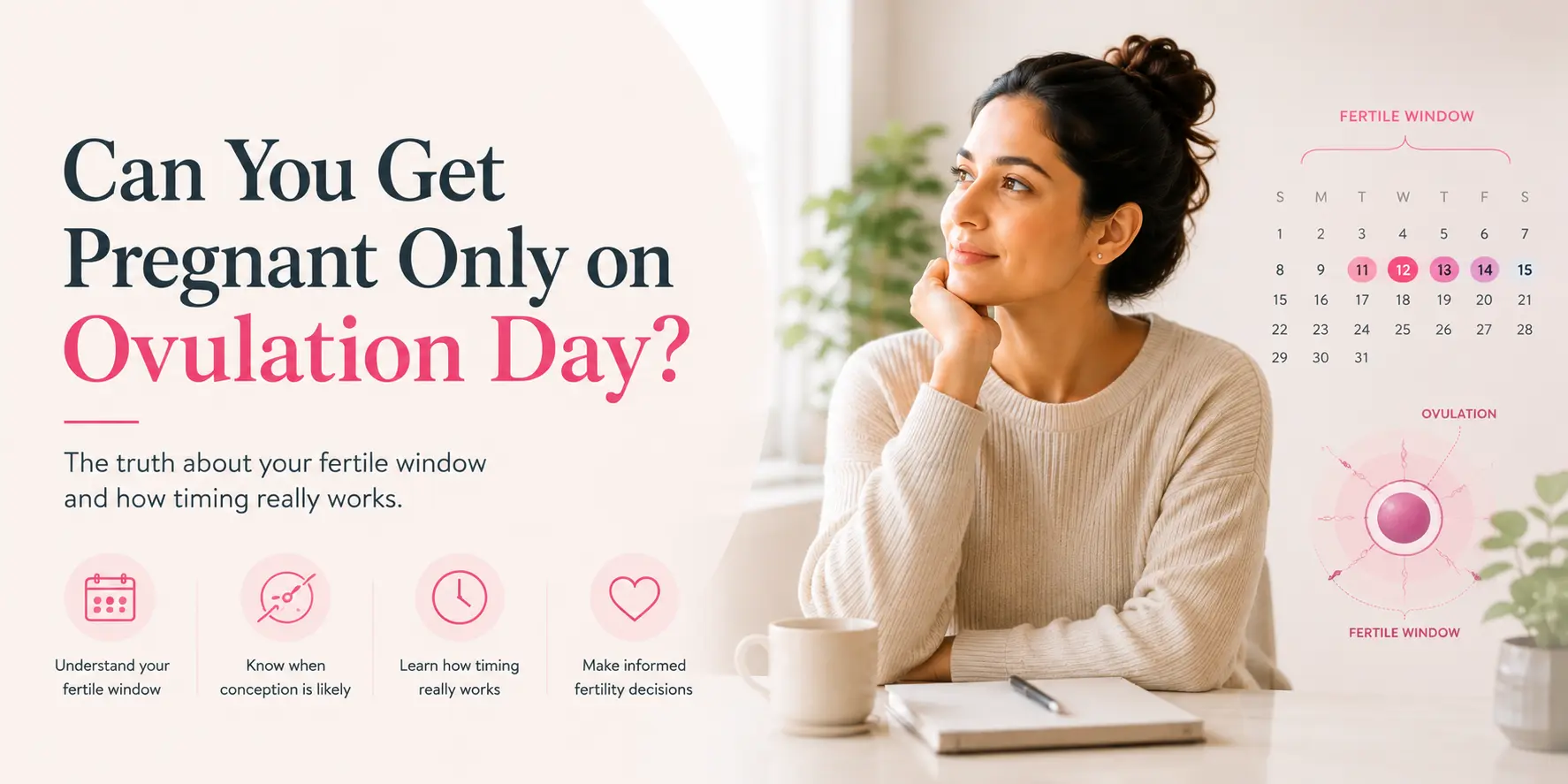
Can You Get Pregnant Only on Ovulation Day?
Many people believe pregnancy can only happen on the exact day of ovulation, but that's not quite ri...
Read Article